

Table of Contents
- Why Verifying Police Charity Donations Matters
- How to Check If a Charity Is Legitimate
- How to Verify a Charity’s Tax-Exempt Status
- Where Do Charity Donations Go: Tracking Your Gift
- Verifying Police Charity Affiliation and Authenticity
- Understanding Apparel Brand Charity Donations
- Red Flags and How to Spot Donation Scams
- Verification Steps for Calls, Texts, and Door-to-Door Requests
- Frequently Asked Questions
Last Updated: October 11, 2026
Why Verifying Police Charity Donations Matters
Donating to support law enforcement is meaningful. But not every charity claiming to help police officers and their families is legitimate. Scammers exploit public goodwill by impersonating real organizations or misrepresenting where donations actually go. Learning how to verify police charity donations protects your money and ensures your gift reaches the people it’s meant to help.
At Honor Blue, we’re committed to transparency in charitable giving. When you support law enforcement causes, you deserve to know exactly where your donation goes. This guide walks you through the verification process step by step so you can give with confidence.

How to Check If a Charity Is Legitimate
The first step in verifying police charity donations is confirming the organization itself is real. Legitimate charities are registered with state authorities and maintain proper legal status. Start by gathering basic information about the organization.
Verify the Organization’s Legal Name and Registration
Ask for the charity’s exact legal name. Many scams use names similar to real organizations, hoping donors won’t notice the difference. A legitimate charity will provide this information immediately without hesitation.
Search your state’s nonprofit registry using the official legal name. Each state maintains a database of registered charitable organizations. You can find your state’s registry through the Secretary of State’s office. Look for the organization’s registration date and current status. If the charity claims to operate nationally, verify registration in multiple states where it fundraises.
Look Up Tax-Exempt Status
Real charities have tax-exempt status from the IRS. This means donations are tax-deductible and the organization meets federal requirements. You can verify this status for free using the IRS Tax Exempt Organization Search tool online. Enter the charity’s name and look for its Employer Identification Number (EIN).
If a charity claims tax-exempt status but doesn’t appear in the IRS database, that’s a major red flag. Never donate to an organization that can’t prove its tax-exempt status. Legitimate charities are proud of this designation and display it prominently.
How to Verify a Charity’s Tax-Exempt Status
Tax-exempt status is your first line of defense against fraud. The IRS maintains a public database of all organizations with 501(c)(3) status, which is the designation most charitable organizations hold. This database is free and searchable online.
When you search the IRS database, you’ll find the organization’s legal name, EIN, and the year it received tax-exempt status. You can also request Form 990, which charities file annually with the IRS. This form shows financial information, including how much money the organization raises and how it spends donations. Many charities post their Form 990 on their websites for transparency.
If a charity won’t provide its EIN or tax-exempt status, walk away. Legitimate organizations have nothing to hide and understand donors need this information to give safely.
Where Do Charity Donations Go: Tracking Your Gift
Understanding how donations flow through an organization is critical. Many donors assume 100% of their gift goes directly to the cause, but legitimate charities have operating costs. The real question is whether the percentage going to the actual mission is reasonable.
Review Financial Statements and Annual Reports
Legitimate charities publish annual reports and financial statements. These documents show revenue, expenses, and how funds are allocated. Look for the breakdown between program expenses (money spent on the actual mission) and administrative costs.
Most reputable charities spend at least 75% of donations on their stated mission. Some spend more. Red flags include charities that spend less than 50% on programs or refuse to share financial information. Request the most recent annual report directly from the organization if it’s not on their website.
Check Third-Party Charity Ratings
Independent organizations rate charities based on financial health, accountability, and transparency. These ratings come from sources like Charity Navigator, which evaluates thousands of nonprofits. You can search for a specific charity and see its rating, financial summary, and donor reviews.
Other rating organizations include GiveWell, which focuses on evidence-based giving, and the Better Business Bureau’s Wise Giving Alliance, which publishes charity standards and reviews. These third-party sources help you compare charities and make informed decisions about where your money goes.
Third-party ratings are your shortcut to vetting charities. If an organization scores poorly on multiple platforms or refuses to be evaluated, that’s a warning sign.
Verifying Police Charity Affiliation and Authenticity
Police-related charities deserve special attention because scammers frequently impersonate law enforcement organizations. A charity might claim to support police officers without any real connection to actual departments or official police organizations.
Confirm Official Police Department Connection
Contact the police department directly to verify whether a charity is officially affiliated. Call the department’s main non-emergency line and ask if they endorse or partner with the organization. Real police departments maintain lists of approved charities and fundraisers.
If a charity claims a specific police officer or department endorses it, ask the organization for written proof. Legitimate partnerships are documented. Be skeptical of charities that claim support from law enforcement but can’t produce official letters or agreements.
Identify Paid Fundraisers and Solicitation Rules
Many police charities hire professional fundraisers to conduct phone calls, door-to-door campaigns, and special events. This is legal, but you should know whether your donation goes to the charity or to the fundraiser’s fee. Professional fundraisers typically keep 40-60% of money raised, with the rest going to the charity.
Ask any caller or solicitor directly: “Are you a professional fundraiser, and what percentage of my donation goes to the charity?” Legitimate fundraisers disclose this information. If they refuse, don’t donate. Some states require paid fundraisers to register and file disclosure documents. Check your state’s regulations for fundraiser licensing requirements.
Understanding Apparel Brand Charity Donations
Apparel brands that support police causes have become increasingly popular. When you buy from a brand that donates to police charities, you’re supporting the cause indirectly. However, the same verification rules apply.
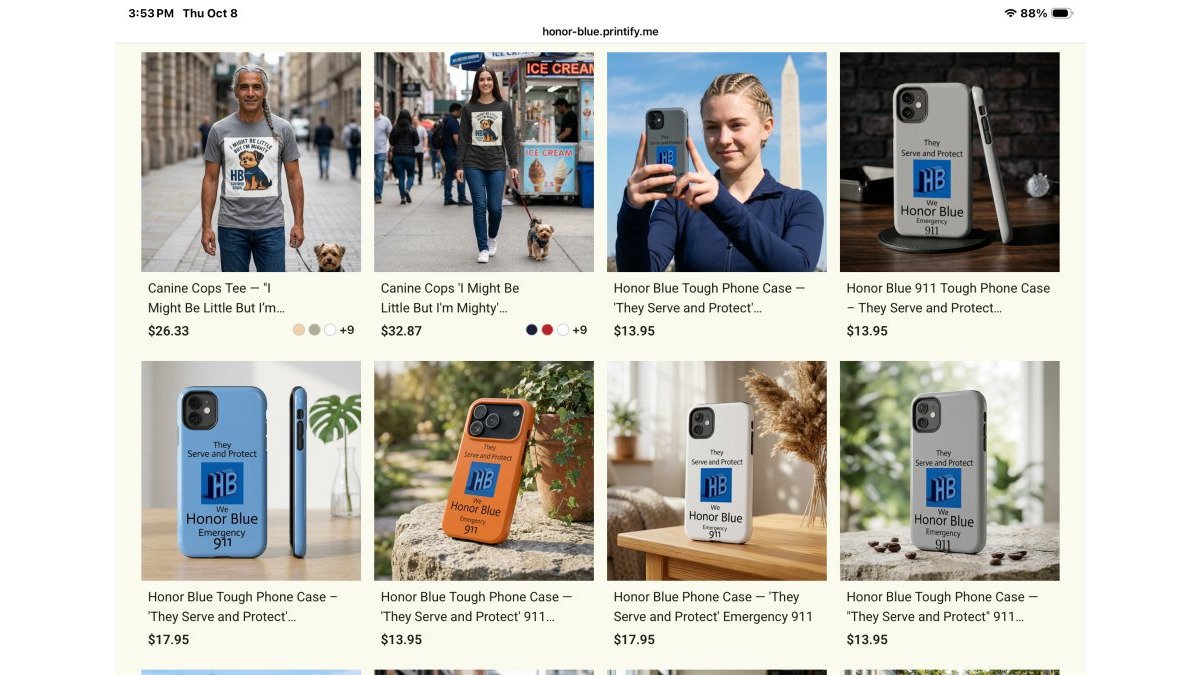
Reputable apparel brands clearly state which charity they support and what percentage of proceeds goes to that organization. Honor Blue, for example, donates 10% of every purchase to Concerns Of Police Survivors (C.O.P.S.), supporting families of fallen officers. The organization is transparent about this commitment and verifiable through the same methods described above.
Before buying from any apparel brand claiming to support police causes, verify the charity they partner with using the steps in this guide. Ask the brand for proof of their donations and financial statements showing the actual amounts given. Brands that can’t provide this documentation may not be genuinely supporting the cause they claim.
Red Flags and How to Spot Donation Scams
Certain warning signs indicate a charity is fraudulent or misusing donations. Learn to recognize these red flags before giving money.
Pressure to donate immediately is a common scam tactic. Legitimate charities allow you time to research and decide. Callers who demand payment right now or claim an urgent deadline are likely fraudsters. Hang up and verify the organization independently.
Refusal to provide basic information is another red flag. Real charities answer questions about their mission, finances, and how donations are used. If someone won’t give you their EIN, legal name, or website, don’t donate.
Requests for cash, gift cards, or wire transfers should raise suspicion. These payment methods are impossible to trace and can’t be reversed if fraud occurs. Legitimate charities accept credit cards, checks, and bank transfers, which provide documentation of your donation.
Vague descriptions of how donations are used suggest mismanagement or fraud. A charity should clearly explain its programs and how donations fund them. “Supporting police” is too vague. “Providing mental health counseling to families of fallen officers” is specific and credible.
Verification Steps for Calls, Texts, and Door-to-Door Requests
When a charity contacts you directly, follow this verification process before committing to a donation.
Step 1: Get the charity’s legal name and ask if they use a professional fundraiser. Write down exactly what they say. If they’re vague or refuse to answer, end the conversation.
Step 2: Hang up and search independently. Don’t use contact information the caller provides. Instead, search online for the charity’s official website and call their main number directly. This confirms the organization exists and prevents you from calling a scammer’s fake number.
Step 3: Check the IRS database and state registry. Verify the legal name, EIN, and tax-exempt status using official government resources.
Step 4: Review third-party ratings. Search the charity on Charity Navigator, GiveWell, or the Better Business Bureau’s Wise Giving Alliance.
Step 5: Ask for written information. Request the charity send you their annual report, Form 990, and documentation of how donations are used. Legitimate organizations provide this material.
Step 6: Verify police affiliation if claimed. Contact the police department directly to confirm any official connection.
Step 7: Use secure payment methods. Donate through the charity’s official website using a credit card or bank transfer. Never send cash or gift cards.
| Verification Step | What to Check | Where to Find It |
|---|---|---|
| Legal Name | Exact charity name matches registration | State nonprofit registry |
| Tax-Exempt Status | IRS 501(c)(3) designation | IRS Tax Exempt Organization Search |
| Financial Information | Form 990 and annual reports | Charity Navigator or organization website |
| Third-Party Rating | Independent evaluation and score | Charity Navigator, GiveWell, or Better Business Bureau |
| Police Affiliation | Official department endorsement | Contact police department directly |
| Fundraiser Disclosure | Percentage going to charity vs. fundraiser | Ask the solicitor directly |
Frequently Asked Questions
How can I verify that a police charity donation claim is real?
Start by searching the charity’s name in the IRS Tax Exempt Organization Search tool to confirm 501(c)(3) status. Contact the police department directly using a phone number from their official website to ask if they endorse the charity. Request documentation showing how donations are used, and check third-party charity ratings on sites like Charity Navigator or GuideStar. Never rely solely on information provided by the fundraiser.
What should I ask before donating to a police-related cause?
Ask the fundraiser for the charity’s legal name, EIN (Employer Identification Number), and confirmation of 501(c)(3) status. Request a breakdown of how donations are allocated and what percentage goes directly to charitable work versus administrative costs. Ask whether the charity is officially affiliated with a specific police department or police association. Request a donation receipt and ask how you can verify your contribution was received.
How do apparel brand charity donations actually work?
Reputable apparel brands that support police causes typically commit a specific percentage of sales to a designated charity. Before purchasing, verify the brand’s donation claim by checking the charity’s financial statements and annual reports, which should list major donors. Contact the charity directly to confirm the partnership and donation amount. Look for transparency on the brand’s website about how much is donated and how frequently donations are made to the organization.
What are the biggest red flags when evaluating a police charity?
Be cautious of charities that pressure you to donate immediately, refuse to provide documentation, or avoid answering questions about how funds are used. Avoid organizations that don’t have a clear 501(c)(3) status or whose websites lack financial transparency. Be wary of unsolicited calls or door-to-door solicitation claiming to represent police departments, and never give payment information over the phone unless you initiated the contact. Always verify independently rather than trusting verbal claims.
Verifying police charity donations takes time, but it protects your money and ensures your gift reaches families who need it. Honor Blue believes in transparency, which is why we clearly communicate that 10% of every purchase supports Concerns Of Police Survivors. When you shop with Honor Blue, you’re supporting a mission you can verify and trust. Shop with us and make a tangible difference in the lives of families of fallen officers.