

Table of Contents
- What Makes Police Supporter Shirts Durable: Fabric and Construction Basics
- The Most Durable T-Shirt Material for Supporter Apparel
- Cotton vs. Polyester Shirts: Which Lasts Longer Under Repeated Wear
- Ripstop, Reinforced Seams, and Stress Points That Prevent Tearing
- How to Tell if a T-Shirt Is Good Quality Before You Buy
- How to Wash Graphic T-Shirts So Prints and Color Last
- Supporter Shirts vs. Duty Uniforms: Why Durability Expectations Differ
- Conclusion
- Frequently Asked Questions
Last Updated: October 4, 2026
What Makes Police Supporter Shirts Durable: Fabric and Construction Basics
Durability in a police supporter shirt comes down to three things: the fiber blend, the way the fabric is woven, and how the seams are reinforced. Get those right and a shirt survives years of washing, wearing, and outdoor use. Get them wrong and you’re replacing it within months.
This guide breaks down exactly what to look for.
A durable supporter shirt is a garment built from tightly woven fabric, reinforced at high-stress seams, and finished with a print method that locks color into the fibers rather than sitting on top of them. Fabric weight, thread count, and stitch density matter more than brand claims.
Here’s what most people miss: durability isn’t one feature. It’s a chain of decisions made at the mill, the cut-and-sew floor, and the print shop. A weak link anywhere shows up after a dozen washes.
The five factors we cover below, fiber, weave, seams, print method, and care, decide whether your shirt looks new after a year or looks tired after a month.
The Most Durable T-Shirt Material for Supporter Apparel
The most durable material for supporter apparel is a poly-cotton blend, typically 50/50 or 60/40 polyester to cotton. This blend balances the strength of synthetic fibers with the softness and breathability of cotton.
Pure cotton feels great but shrinks and wears thin over time. Pure polyester resists tearing but can feel slick and traps heat. The blend gives you the best of both.
Key traits of a strong poly-cotton blend:
- Tear resistance from the polyester content
- Breathability from the cotton content
- Less shrinkage after repeated washing
- Better colorfastness for printed graphics
- Faster drying than 100% cotton
Fabric weight also matters. A shirt in the 5.5 to 6.5 ounce range holds up better than thinner 4-ounce options. Heavier fabric resists stretching at the collar and holds its shape through repeated wear.
Check the label for a fabric weight listed in ounces per square yard. If the brand doesn’t publish it, that’s often a sign the fabric is on the lighter side.
Cotton vs. Polyester Shirts: Which Lasts Longer Under Repeated Wear
Polyester lasts longer than cotton under repeated wear, but a poly-cotton blend often outlasts both for everyday use. Each fiber brings a trade-off.
Cotton is soft, breathable, and takes print well. It also shrinks, wrinkles, and thins out at stress points over time. Cotton shirts tend to fade faster and lose shape at the neckline.
Polyester resists stretching, holds color well, and dries fast. It’s less breathable on its own and can pill if the fabric is low quality.
Poly-cotton blends combine cotton’s comfort with polyester’s strength. For supporter shirts worn regularly and washed often, this is the sweet spot.
| Fiber | Wear Resistance | Breathability | Shrinkage | Print Hold |
|---|---|---|---|---|
| 100% Cotton | Moderate | High | High | Good |
| 100% Polyester | High | Low | Low | High |
| Poly-Cotton Blend | High | Moderate | Low | High |
The takeaway: if you want a shirt that survives repeated washing without losing shape or color, go with a blend.
Ripstop, Reinforced Seams, and Stress Points That Prevent Tearing
Ripstop fabric uses a grid of thicker threads woven into the material to stop small tears from spreading. It’s a construction method, not a fiber, so it can be applied to cotton, polyester, or a blend.
Where the shirt is stitched matters just as much as what it’s made of. The collar, shoulder seams, and armholes take the most stress. Reinforced seams with double stitching or bar tacks at these points prevent the most common failures.
Look for these construction details:
- Double-stitched hems on sleeves and bottom
- Taped or reinforced shoulder seams
- Bar tacks at pocket corners and side vents
- Ribbed collars that hold shape after washing
- Side-seamed construction rather than tubular
A shirt with all five holds up far longer than one missing even two of them.
Tubular shirts, made without side seams, are cheaper to produce but twist and lose shape faster. If a listing doesn’t mention side seams, assume it’s tubular.
How to Tell if a T-Shirt Is Good Quality Before You Buy
You can judge a shirt’s quality in under a minute by checking four things: fabric weight, stitch density, seam reinforcement, and print method. Here’s how to assess each before you spend money, and what the numbers actually mean.
1. Feel the fabric weight. Fabric weight is measured in ounces per square yard (oz/yd²). For a supporter tee, 5.5 to 6.5 oz/yd² is the durable range. Under 5 oz/yd² and the fabric is thin enough to go see-through when held to light, and it will thin out at the collar and shoulders within a season. Over 7 oz/yd² and you’re into heavyweight workwear territory, durable, but stiffer and slower to dry.
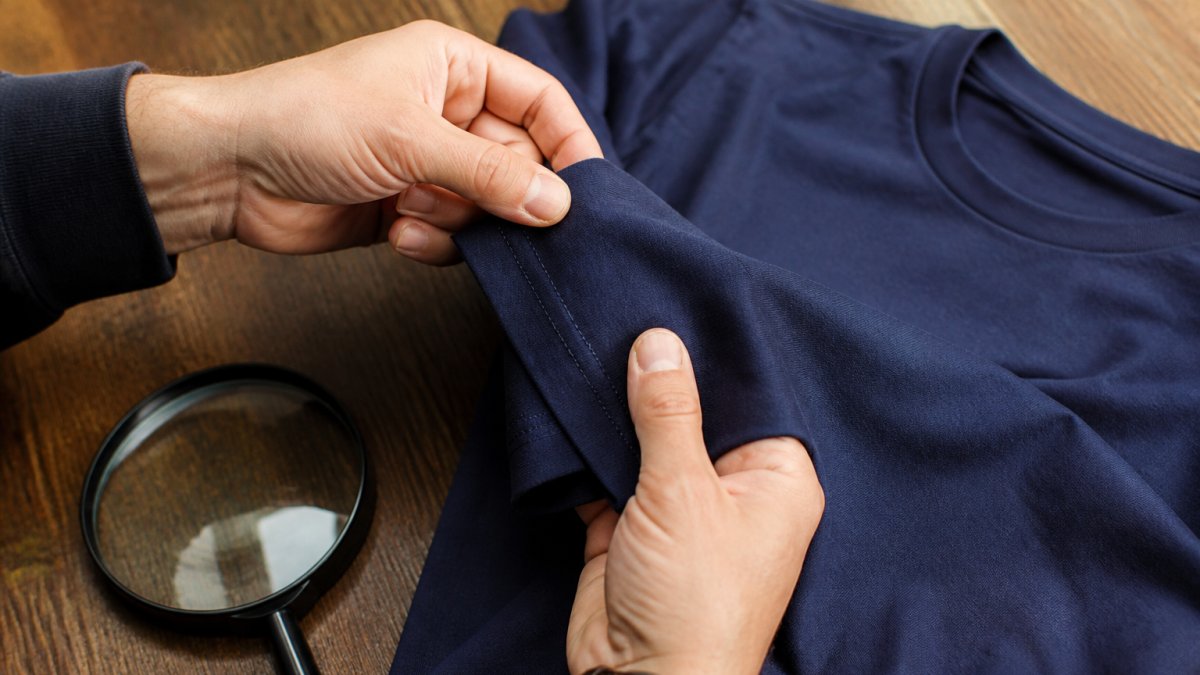
2. Check the stitching. Look at the inside hem. A single row of stitching is the cheapest construction and the first thing to unravel. Double-needle stitching, two parallel rows, is the standard for a shirt meant to last. Count stitches per inch: 10 to 12 stitches per inch is a tight, durable seam. Under 8 and the seam is loose enough to snag and pull. Run your fingernail along the hem.
3. Inspect the stress points. The collar, shoulder seams, and armholes take the most stress. A ribbed collar with a taped neck seam holds its shape through repeated washing; a raw or single-stitched collar will stretch into a wavy “bacon neck” within months. Check for bar tacks, short, dense stitches, at pocket corners, side vents, and anywhere a seam meets a stress point.
4. Ask about the print method. Screen printing, direct-to-garment (DTG), heat transfer, and embroidery all age differently. Screen printing lays a thick ink layer that cures into the fabric. DTG prints soak into the fibers and feel softer. Heat transfers sit on top of the fabric. Embroidery is a durable decoration but adds weight and stiffness.
5. Read the care label. Also check the fiber content: a 50/50 or 60/40 poly-cotton blend will hold shape and color longer than 100% cotton, which shrinks and fades faster.
If a brand won’t tell you the fabric weight or print method, that’s your answer.
Bring a small tape measure or use your phone’s ruler app when shopping in person. Measure the collar width and the hem depth. A collar under 3/4 inch and a hem under 1 inch are signs of cost-cutting.
How to Wash Graphic T-Shirts So Prints and Color Last
Washing graphic T-shirts inside out in cold water and drying on low heat is the single best way to protect the print and fabric. Heat is the enemy of both.
Follow these steps to extend shirt life:
- Turn the shirt inside out before washing
- Use cold water on a gentle cycle
- Skip fabric softener, it breaks down print adhesives
- Avoid bleach and harsh detergents
- Tumble dry on low or hang to dry
- Never iron directly over the graphic
For the longest life, hang dry. The dryer is where most shrinkage and print cracking happens. Line drying in shade also protects color from fading.
Wash graphic tees with similar colors and avoid overloading the machine. Friction between garments is a quiet cause of wear.
Cold wash, low heat, inside out. Those three habits add years to any printed shirt.
Supporter Shirts vs. Duty Uniforms: Why Durability Expectations Differ
Supporter shirts and duty uniforms serve different purposes, so they’re built to different standards, and the difference matters most in one place competitors rarely address: the graphic itself.
A duty uniform is designed for daily physical work in demanding conditions. It’s built around abrasion resistance, snag resistance, and in some cases slash resistance, using heavier fabric, ripstop or twill construction, and reinforced stress points. A supporter shirt is designed for comfort, expression, and repeated casual wear. It’s built around holding its shape, keeping its print, and resisting fading through regular washing.
That doesn’t mean supporter shirts should fall apart. It means the durability bar is different, and the graphic is usually the first thing to fail, not the fabric.
Where supporter shirts actually wear out
On a duty uniform, the failure points are seams, elbows, and knees. On a supporter shirt, the failure points can include the print and the collar. Here’s what to watch:
- Print cracking, happens when the ink layer is stretched or overheated. Common on heat transfers and on DTG prints applied to dark fabric without a proper underbase.
- Print fading, caused by UV exposure and repeated washing. Screen-printed designs on dark shirts fade slowest; DTG and heat transfers fade faster.
- Collar stretch, a ribbed collar with a taped neck seam holds shape; a single-stitched collar stretches into a wavy edge.
- Hem and sleeve fraying, double-needle stitching resists this; single-needle stitching doesn’t.
- Fabric thinning at the shoulders, happens on lightweight fabric under 5 oz/yd², especially if you carry a bag on one shoulder.
What to expect from each
- Duty uniforms: heavier fabric (often 6.5 oz/yd² and up), ripstop or twill construction, reinforced stress points, higher cost, built for abrasion and snags.
- Supporter shirts: mid-weight fabric (5.5 to 6.5 oz/yd²), comfortable fit, durable print, moderate cost, built for repeated washing and casual wear.
- Both: should resist shrinking, fading, and seam failure under normal use.
How to judge a supporter shirt on its own terms
When you buy a supporter shirt, judge it against the wear it will actually get. If you plan to wear it weekly and wash it often, quality construction matters. If it’s a display piece, you have more room to compromise.
A practical way to think about it: a supporter shirt that survives many wash cycles without visible print cracking, collar stretch, or hem fraying is doing its job well. A duty uniform is expected to survive far more abrasion, but it’s also expected to cost more and to be replaced on a department schedule.
Don’t expect a supporter tee to perform like a duty uniform. If you need abrasion and snag resistance for actual field work, buy a uniform-grade shirt. If you want to show support and wear the shirt regularly, judge it on print longevity, collar shape, and seam integrity.
The fabric on a supporter shirt rarely fails first, the print does. Buy for print method and collar construction, not just fabric weight.
Conclusion
Finding a police supporter shirt that lasts means knowing what to look for: the right fiber blend, tight construction, reinforced seams, and a print method that survives the wash. Skip those details and you’ll be shopping again in a few months.
Our apparel is made for people who want to show real support for law enforcement, not just wear a logo. Ten percent of every purchase goes to Concerns Of Police Survivors (C.O.P.S.) to support the families of fallen officers. The brand was founded by a retired physician with a deep respect for those who serve.
Get started with Honor Blue and wear apparel that honors the badge while holding up to everyday life.
Frequently Asked Questions
What is the most durable material for a police supporter shirt?
A poly-cotton blend offers a good balance of tear resistance, colorfastness, and comfort for police supporter shirts. The polyester adds strength and moisture-wicking, while cotton provides breathability. Look for a shirt that holds up to repeated wear without feeling stiff.
Do cotton or polyester shirts last longer?
Polyester shirts generally outlast cotton in durability tests because the fibers resist abrasion, shrinkage, and fading better. Cotton feels softer but breaks down faster with repeated washing and can shrink. A poly-cotton blend gives you the comfort of cotton with the wear resistance of polyester.
How should you wash a graphic T-shirt to prevent fading?
Turn the shirt inside out, wash in cold water on a gentle cycle, and avoid fabric softener, which breaks down print adhesives. Skip the dryer or use low heat. Heat is the main enemy of screen-printed graphics, causing cracking and fading. Hang drying preserves colorfastness and print integrity far longer than tumble drying, especially for police supporter shirts worn regularly.
How can you tell if a T-shirt is well made before buying?
Check the stitching at stress points like shoulders, armholes, and the hem. Double-stitched seams and reinforced taping at the neck and shoulders signal a shirt built for repeated wear. Feel the fabric weight; thin, flimsy material tears easily. Look for side-seamed construction instead of tubular, since side seams hold shape better after washing. These details separate durable police supporter shirts from trendy apparel that falls apart quickly.